Bird flu has arrived in Victoria — and our wildlife needs us
If you’ve spent time in the ocean with us, you’ll know that some of our favourite encounters aren’t with people at all.
They’re with the curious little penguin popping up beside you. A seal watching from the water. Seabirds flying overhead. Dolphins cruising past when you least expect them.
These moments are a huge part of why we love the ocean.
So it’s pretty tough to watch bird flu arrive in Victoria — and spread quickly.
As of 17 August, there have been 74 confirmed cases in wild birds across Victoria, including south-west Victoria, Apollo Bay and Western Port Bay, with detections at Clyde and Phillip Island. Crested Terns have been detected, along with the first confirmed case in a Little Penguin.
Why are we worried?
Highly pathogenic bird flu, including H5N1, can be devastating for wildlife.
Seabirds and waterbirds — including ducks, geese, swans, gulls, terns and penguins — are at much higher risk of contracting and spreading the virus than most land birds. Waterfowl and shorebirds are also the main natural reservoirs for avian influenza viruses.
And this isn’t just a bird problem.
H5N1 can also have serious impacts on marine mammals, including seals, sea lions, dolphins and whales.
That’s particularly concerning here in Victoria, where our coastlines and wetlands are home to so much wildlife.
What can you do?
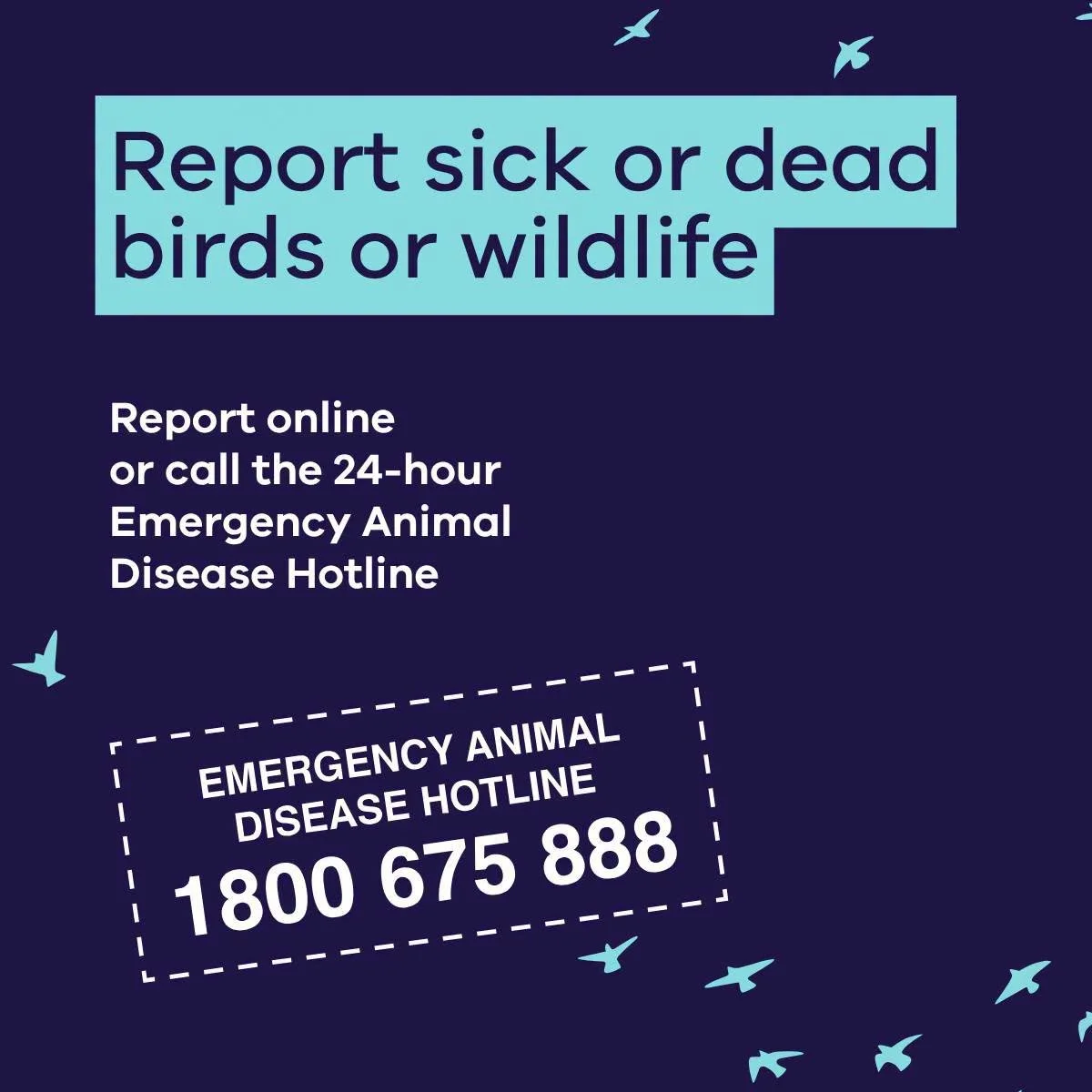
One of the most useful things you can do is keep an eye out and report wildlife that appears sick or dead.
If you find a sick or dead wild bird or marine mammal:
AVOID touching the animal or its surroundings.
RECORD what you see — photos can help.
REPORT it to DEECA or the Emergency Animal Disease Hotline on 1800 675 888.
You should report:
A cluster of 5 or more sick or dead wild birds.
Any single sick or dead seabird, waterbird, shorebird or bird of prey.
Any single sick or dead marine mammal, such as a seal, sea lion or dolphin.
And please keep your distance from sick or dead wildlife and keep dogs away too.
More info on how to report can be found here.
And if this is feeling a bit heavy…
We get it.
Watching wildlife we love come under threat can bring up sadness, anger, fear and even grief.
There’s a name for this: ecological grief.
When you spend time in nature, these aren’t just abstract environmental issues. They’re the places you visit, the animals you encounter and the moments that become some of your favourite memories.
So if you’re feeling worried or overwhelmed, you’re not alone.
It’s okay to take a break from the news. Go for a swim. Sit on the beach. Watch the birds. Talk to your salty mates who understand why this matters.
Grief and hope can exist alongside each other.
We might not be able to control everything happening in the natural world, but we can pay attention. We can report wildlife. We can give animals space. We can keep learning. And we can keep showing up for the ocean we love.
Because caring deeply can be heavy.
But it’s also what makes us want to protect it. 🌊💙